This year’s annual Information and Communication Technology (ICT) quiz competition organized by Center for Information Technology and Development for secondary school Students closed on Saturday 29th November, 2008 at Kano state School of Technology.
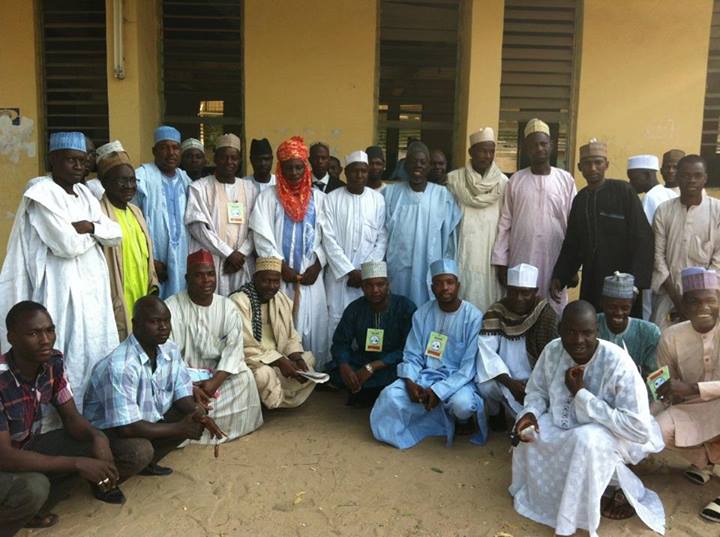
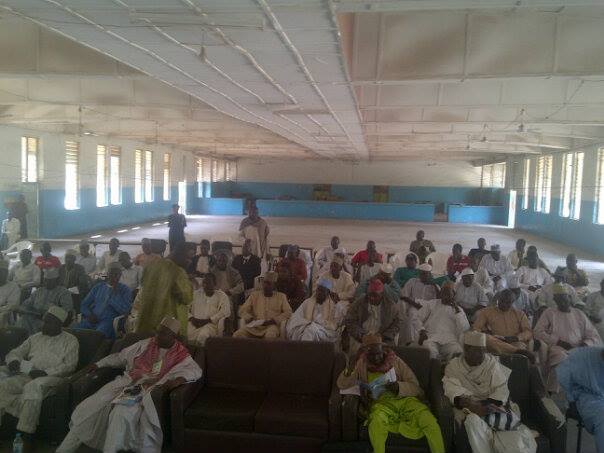
Organized by the Center for Information Technology and Development (CITAD) the competition was attended by twenty nine secondary schools, from Kano, Katsina, Bauchi and Jigawa States.
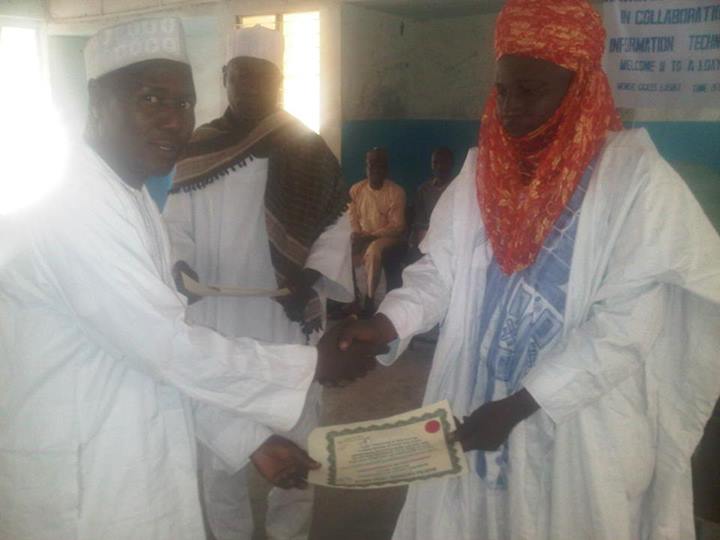
Each school was represented by two students. Winning school for this quiz was Government Girls Science and Technical College Kano, while Government Technical College Wudil and Hauwa Memorial College Funtua came second and third respectively. Announcing the winner the managing Director Midwat computer Institute Kano Alhaji Abdullahi Ibrahim Nashe also said this year overall best student was Maude Yusuf from Government Technical College, Wudil while Nusaiba Ibrahim Rabi’u from Government Science and Technical College, Kano emerged as the best female student. Alhaji Abdullahi Ibrahim Nashe announced the prizes for the outstanding participating schools and students.
The winning school, Government Girls Science and Technical College Kano won a brand new Laptop computer donated by Microsoft Nigeria, the second best school Government Technical College, Wudil won a brand new desktop computer while Hauwa Memorial College, Funtua, Katsina which came third won a new LaserJet Printer. Other prizes included Television Set for the best female student; refurbished PC was given to the best male Student, wall clocks were given to the winning schools’ teachers. Computer text books were given to all staff and students who participated in the competition.
Alhaji Abdullahi Ibrahim Nashe, the Proprietor of Mediwat School of Computer Sciences announced donation of computer to one of the participating schools from Kano State, GSS Sharada. He said the donation was to signal his enrollment to the Old Student Personal Computer (OSPC) scheme of the Information Technology Association of Nigeria (ITAN), which was launched two days earlier in Kano.
In his speech the representative of the Kano State Commissioner for Education who is also the Director for Education Support Services, Alhaji Rabi’u Yusuf Alhaji congratulated the winner and commended CITAD for the wonderful initiative which he urged other IT organizations to emulate. He said the Ministry was fully prepared to support this programme.
Alhaji Rabi’u Yusuf Alhaji then asked the organizers to seek for government support of for this very useful initiative. Also speaking at the occasion, the representative of the Education Committee Chairman of House of Representative Hon. Farouk Muhammad Lawan, Alhaji Sani Mukaddas pledged to support such educative efforts focused towards upcoming generation.
During the two day quiz competition, the Kano State Special Advisor to the governor on education and information Technology, Dr. Bashir Galadachi, who declared it open, delivered the keynote address during which he urged the students to take the use of IT very seriously and therefore make effort to learn. The Special Advisor was accompanied by Hajia Maryam Sulaiman Ahmad and Alhaji Ahmad Maizube, both staff from his office. Also represented at the occasion was NIIT Kano Center by Mr. Martin and Miss. Peace Ajawuile.
In his closing remark the Executive Director of CITAD, Y. Z. Ya’u expressed appreciation at the support and the assistance given towards successfully conduct of the quiz competition. He thanked the students, their teachers and the principals of the participating schools for honoring the invitation to be part of the quiz competition.
Y. Z. Ya’u appreciated the support and the general good will of the public and private sectors as moral boosting to the CITAD. He pointed out that the donation made by the largest IT company in the world, Microsoft to the competition had shown how far the initiative has gone in IT world. He also thanked the Nigerian Communications Commission and the Office of the Special Adviser to the Kano State Governor on Education and Information Technology for their support to the quiz programme.
The Executive Director then commended the Kano State Government dynamism in educational pursuit, assuring that CITAD will continue to be committed to producing self-reliant and patriotic up-coming generation of the youth. Other organizations that assisted according to the Executive Director were the Intersystem Computer Services Limited, Kano, the Mediwat School of Computer Science, Kano, Freedom Radio, Kano, Jigawa State Hotel, Dutse, Horizon Telecommunications Limited, Kano, Directorate for Social Re-orientation, Kano State, APCON and the School of Technology, Kano State Polytechnic. He also acknowledged the contributions of many individuals, too numerous to mention in making the event a success.
Mallam Aminu Beli
Chairman ICT Quiz Committee